

Kookaburra spiritual meaning

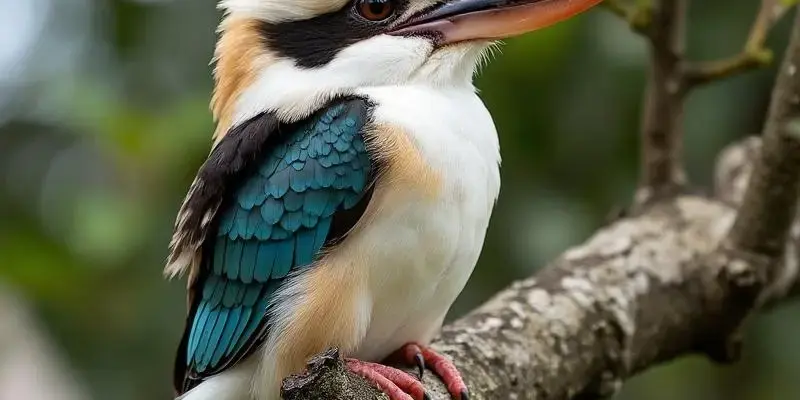
The kookaburra’s distinctive laugh echoing through the Australian outback carries profound spiritual symbolism across cultures and traditions. As Australia’s largest kingfisher species, this iconic bird serves as a powerful messenger between worlds, offering wisdom about joy, family bonds, and spiritual awakening to those who encounter its presence.
Key Takeaways
- Kookaburras represent joyful healing energy and remind us to approach life with laughter
- In Aboriginal Dreamtime, kookaburras function as sacred messengers between human and spirit realms
- Their complex family structures teach lessons about intergenerational bonds and community responsibility
- Kookaburra appearances often signal the end of difficult periods and the beginning of transformation
- Their dawn calls symbolize spiritual awakening and authentic communication with others
The Laughing Messenger of Dawn
The unmistakable chorus of the kookaburra’s laugh piercing the morning air has become one of Australia’s most recognizable natural sounds. As the largest kingfisher species in Australia, the laughing kookaburra (Dacelo novaeguineae) measures an impressive 45cm (18 inches) in length and has established itself as an iconic symbol in Australian culture, appearing in everything from films and television to children’s songs.
These remarkable birds primarily inhabit eastern Australia, ranging from the Cape York Peninsula down to the Eyre Peninsula, with introduced populations establishing themselves in other regions. Despite belonging to the kingfisher family, kookaburras rarely eat fish, instead preferring a diet of small reptiles, rodents, and insects.
What makes kookaburras truly special goes beyond their biological characteristics. Their distinctive call has evolved beyond its territorial function to take on profound spiritual significance. The kookaburra’s laugh has become a powerful spiritual symbol that resonates across cultures, traditions, and time.
Aboriginal Dreamtime: Sacred Messenger Between Worlds
In Aboriginal culture, spanning back over 65,000 years, the kookaburra holds deep spiritual significance as a messenger between realms. According to ancient Dreamtime stories, the kookaburra’s morning laugh signals to sky spirits to light the sun each day, making this bird a crucial participant in the daily creation of dawn.
Many Aboriginal traditions view the kookaburra as a weather forecaster, with its call often believed to herald coming rain – connecting the bird directly to cycles of fertility and sustenance. This connection to both sky and earth places the kookaburra in a unique position as a bridge between the human world and spirit world.
Encounters with kookaburras are considered particularly auspicious in certain Aboriginal traditions. Locations with special Aboriginal significance, such as the Red Hands Cave walking track, often feature kookaburras, further cementing their role as spiritual gatekeepers. The appearance of a kookaburra is frequently interpreted as a sign of good fortune and divine acknowledgment.
Joy and Laughter as Spiritual Medicine
Perhaps the kookaburra’s most powerful spiritual teaching centers on laughter as medicine. Its morning call serves as a reminder to begin each day with joy and gratitude, regardless of circumstances. This teaching contains a fascinating paradox – while we perceive the kookaburra’s call as laughter, it actually functions as a territorial announcement.
This contradiction offers a profound lesson in balance. The kookaburra teaches us to maintain healthy boundaries while simultaneously embracing joyful energy. When a kookaburra appears in your life, it often delivers a specific message: examine how much you laugh each day. If kookaburra has entered your awareness, you likely need more laughter and lightheartedness.
The spiritual instruction carried by the kookaburra is clear: it’s time to transform hurt into happiness, with laughter serving as the vehicle for this healing journey. I’ve found a simple kookaburra-inspired practice can help activate this energy:
- Begin each morning with 30 seconds of gentle laughter (even if forced at first)
- Throughout the day, pause to find humor in challenging situations
- End the day by recalling three moments that brought a smile to your face
Family Bonds and Relational Wisdom
Kookaburras demonstrate remarkable family structures that offer spiritual lessons about community responsibility. They typically form monogamous pairs that remain together for life, but what makes their social organization truly special is how they incorporate up to five non-breeding offspring who stay to help raise new generations.
This cooperative breeding strategy, even more pronounced in blue-winged kookaburra family groups (which can include up to 12 members), offers powerful teachings about intergenerational support and family commitment. The sight of two kookaburras together specifically signifies happiness in relationships and harmonious family connections.
When kookaburra appears as a spiritual guide, it often prompts important questions about family responsibilities: What do you owe your family, and what do they owe you? The kookaburra’s message frequently includes a gentle warning about prioritizing career over family connections, encouraging instead a mindful balance between professional ambitions and nurturing relationships.
Spiritual Communication and Awakening
The kookaburra’s dawn and dusk calls symbolize periods of spiritual transition, making this bird a powerful emblem of awakening consciousness. Just as the kookaburra announces the transition between night and day, its spiritual energy helps navigate the threshold between ordinary awareness and deeper spiritual insights.
This bird teaches us about authentic communication – expressing truth with joy rather than harshness. Its territorial calls demonstrate how to set healthy boundaries while maintaining connection with others. The kookaburra reminds us to listen to our natural instincts and inner wisdom, especially during times of change.
I’ve observed that kookaburra’s precise, timely calls offer a model for effective communication: speak when necessary, with clarity and purpose. The morning call of the kookaburra serves as a perfect metaphor for spiritual awakening – a joyful announcement that brings us fully into presence and awakened consciousness.
Cross-Cultural Spiritual Interpretations
While the kookaburra is native to Australia, its spiritual symbolism resonates across diverse traditions. Universally, the kookaburra represents uninhibited joy and finding humor amid life’s challenges. This bird teaches us to approach difficulties with a light heart without diminishing their significance.
Though not directly mentioned in Biblical texts, birds generally symbolize spiritual freedom and divine provision in Judeo-Christian traditions. The kookaburra’s joyful call can be interpreted as representing divine joy and the promise of new beginnings. Similarly, in Islamic perspectives, birds often symbolize the soul and purity, with the kookaburra’s presence potentially signifying spiritual awakening.
From a Buddhist viewpoint, the kookaburra embodies teachings about impermanence (anicca) and mindfulness in the present moment. Its patient observation before swift action when hunting reflects the principle of right mindfulness. Across these diverse traditions, spiritual bird symbolism converges around themes of joy, communication, and connection to divine energy.
Kookaburra as Transformation Guide
When kookaburra appears in your life, it often signals that you’ve reached the conclusion of a difficult journey, with new, healthier growth beginning to emerge. This bird frequently shows up during significant life transitions, serving as a comforting guide through periods of change and uncertainty.
The kookaburra delivers a powerful message of hope: no matter how challenging your circumstances, you will find your path again. Its unusual self-sufficiency – rarely drinking water and instead obtaining moisture from food – serves as a metaphor for finding resources within ourselves during difficult times.
In dreams, kookaburra symbolism often points to communication needs, connection to natural instincts, and the presence of untapped joy in your life. The kookaburra’s fundamental spiritual teaching during challenging times centers on transformation through joy rather than suffering – a reminder that laughter can light our way through even the darkest passages.
Practical Applications: Living with Kookaburra Wisdom
Incorporating kookaburra’s spiritual teachings into daily life requires intentional practice. I recommend creating a personal “laughter challenge” with specific daily goals to increase joy – perhaps starting with just three genuine laughs each day and gradually building from there.
The kookaburra’s family structure inspires us to assess and strengthen our own family connections. Take time to consider what responsibilities you have to your family members and what healthy expectations you can have of them. This bird’s wisdom encourages creating clear boundaries that protect relationships rather than isolating you from loved ones.
Dawn and dusk reflection practices mirror the kookaburra’s calling times and can enhance spiritual awareness. Even five minutes of mindful attention at these transition periods can significantly deepen your connection to kookaburra energy. Remember that whenever you hear laughter – whether from a bird or human – it serves as a spiritual reminder that dawn always follows darkness, and joy awaits on the other side of challenge.
The article explores the profound spiritual symbolism of the kookaburra, Australia’s largest kingfisher species known for its distinctive laugh. This iconic bird serves as a messenger between worlds across various cultural traditions. The kookaburra represents joyful healing energy, teaching humans to approach life with laughter. In Aboriginal Dreamtime, it functions as a sacred communicator between human and spirit realms. Its complex family structures demonstrate lessons about intergenerational bonds and community responsibility. Kookaburra appearances often signal transformation and the end of difficult periods, while their dawn calls symbolize spiritual awakening.
| Key Aspects | Spiritual Significance |
|---|---|
| Distinctive Laugh | Healing energy, reminder to embrace joy |
| Aboriginal Connection | Sacred messenger, bridge between worlds |
| Family Structure | Lessons about community responsibility and bonds |
| Dawn/Dusk Calls | Spiritual awakening and communication |
| Presence in Life | Signals transformation and end of difficult times |